Perinatal and reproductive psychiatry
Care for depression, anxiety, and OCD before and after birth, with straight answers about medication and breastfeeding
Updated: 10/2026
Written by Julie Pham, MD
The postpartum period is a high-risk time
Having a baby is among the hardest things a mind and body go through. Hormones fall sharply within days of delivery, sleep gets chopped into pieces, and your identity and relationships shift all at once. The American College of Obstetricians and Gynecologists (ACOG) estimates that about one in five pregnant or postpartum people experience a mental health condition (ACOG, 2023), and nearly one in seven experience post partum depression. A systematic review put the rate of major or minor depression at roughly 7 to 13 percent in the months after delivery, depending on how and when it was measured (Gavin et al., 2005).
A lot of it goes unrecognized. Women tell themselves it is just exhaustion, or that they should be grateful, or that everyone feels this way. Some of that is true but a lot of it is not, and it is treatable.
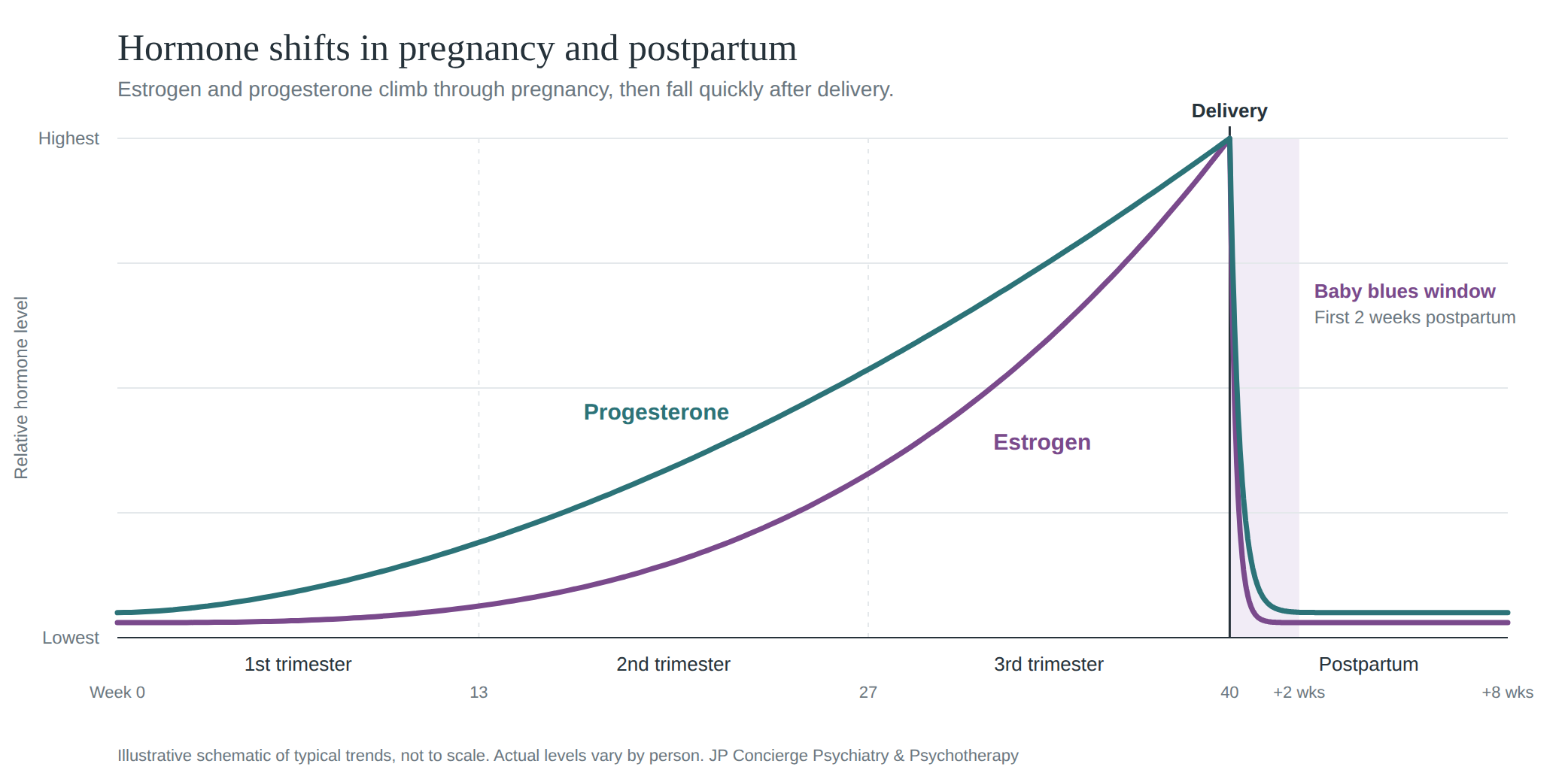
What happens? Let's review pregnancy biology. The hormonal shift that occurs in pregnancy is dramatic and cannot be understated. For example, progesterone levels in pregnancy are 10-15x higher than in a normal menstrual period, and estrogen is almost 50x as high. In fact, it is estimated that estrogen exposure during pregnancy is higher than a woman’s entire lifetime outside of the pregnancy.
Baby blues, or something more?
The baby blues are weepiness, mood swings, and feeling overwhelmed in the first days after birth. They usually peak around day three to five and fade within about two weeks. If low mood, anxiety, or feeling unlike yourself lasts longer than that, or is severe at any point, it is not the blues.
Postpartum depression can start during pregnancy or any time in the first year. It does not always look like sadness. It can look like irritability, rage, numbness, trouble bonding, or not being able to sleep even when the baby sleeps. Partners often notice before the mother does.
Postpartum anxiety and OCD
Postpartum anxiety is racing worry that will not quiet down. You check the baby’s breathing again and again, lie awake running worst cases, or feel physically on edge all day.
Postpartum OCD involves intrusive thoughts or images, often of the baby being harmed, dropped, or drowned, followed by compulsions such as checking, avoiding, or seeking reassurance. A meta-analysis found OCD in roughly 2 to 3 percent of postpartum women, about double the rate in the general population (Russell et al., 2013). The thoughts are unwanted and horrifying to the person having them, and the response is to protect the baby more. That is the opposite of wanting to cause harm. These symptoms respond well to treatment, and most people who have them are relieved to learn they have a name.
When is it an emergency? Postpartum psychosis
Postpartum psychosis is rare, roughly 1 to 2 in 1,000 deliveries, and usually starts within the first two weeks, with a peak range of around two to four weeks. Signs include confusion, severe insomnia, racing or disorganized thinking, paranoia, hallucinations, or a manic high. There are distorted, intrusive thoughts of wanting to harm baby or self. It is closely tied to a history of bipolar disorder and is a medical emergency (Bergink et al., 2016). If this sounds like you or someone you love, call 911 or go to the nearest emergency room.
You can also call or text the National Maternal Mental Health Hotline at 1-833-852-6262 (24/7), or call or text 988.
How we treat perinatal and postpartum mental health
For mild to moderate symptoms, therapy such as CBT or interpersonal therapy is a reasonable first step. Medication makes sense when symptoms are more severe, when therapy is not enough or not available, or when you have responded to a medication before. ACOG’s guideline on treating mental health conditions in pregnancy and postpartum covers depression, anxiety, bipolar disorder, and postpartum psychosis, with a focus on medication safety and effectiveness (ACOG, 2023). Untreated illness carries risks for you and the baby too, so the real question is which risk is smaller and what you are comfortable with. I lay out the tradeoffs, and the decision is yours.
Breastfeeding does not automatically rule out treatment. Several antidepressants, sertraline among them, have a long track record in nursing mothers, and I check each medication against the NIH’s LactMed database before recommending it.
Newer options work faster than standard antidepressants. In two placebo-controlled trials, intravenous brexanolone lowered depression scores significantly more than placebo at 60 hours (Meltzer-Brody et al., 2018). Zuranolone, an oral medication taken for 14 days, was approved by the FDA for postpartum depression in 2023. Both carry real tradeoffs, including sedation and driving restrictions, so we talk through whether they fit your situation.
If you are pregnant or planning to be
The best time to review medications is before conception, not after a positive test. This matters most for bipolar disorder, where some medications are risky in pregnancy and stopping abruptly raises the chance of relapse. We can also build a postpartum plan in advance: protected sleep, who helps and when, and an early check-in within the first couple of weeks after delivery.
How care works at JP Concierge Psychiatry
The first visit is long: we map your history, including past episodes and family history, and we look at how this pregnancy or postpartum period compares. Partners are welcome to join provided an ROI (Release of Information) is signed for your privacy. Telehealth means you do not have to get a newborn out the door for an appointment. With your permission I coordinate with your OB, midwife, pediatrician, and therapist. Early follow-ups are closer together, because a few weeks is a long time with a newborn.
While these hormone spurts are normal and necessary for pregnancy to help the body change to accommodate a growing fetus, they also help the maternal brain to strengthen attachment to a newborn infant as well as help prepare for proper care-giving. However, for a number of perinatal women (and most patients I see in my practice), this rapid hormone change can often lead to depressive or anxious symptoms during pregnancy. Symptoms like fatigue, nausea, insomnia, can be present in both depression and in a normal first trimester pregnancy. Many women struggle with understanding if they are having a normal pregnancy or if they are depressed. In my practice, we carefully assess the symptoms to ensure a mentally healthy pregnancy.
References
American College of Obstetricians and Gynecologists. Treatment and management of mental health conditions during pregnancy and postpartum: ACOG Clinical Practice Guideline No. 5. Obstet Gynecol. 2023;141(6):1262-1288. PubMed
Gavin NI, Gaynes BN, Lohr KN, et al. Perinatal depression: a systematic review of prevalence and incidence. Obstet Gynecol. 2005;106(5 Pt 1):1071-1083.
Russell EJ, Fawcett JM, Mazmanian D. Risk of obsessive-compulsive disorder in pregnant and postpartum women: a meta-analysis. J Clin Psychiatry. 2013;74(4):377-385.
Bergink V, Rasgon N, Wisner KL. Postpartum psychosis: madness, mania, and melancholia in motherhood. Am J Psychiatry. 2016;173(12):1179-1188.
Meltzer-Brody S, Colquhoun H, Riesenberg R, et al. Brexanolone injection in post-partum depression: two multicentre, double-blind, randomised, placebo-controlled, phase 3 trials. Lancet. 2018;392(10152):1058-1070. PubMed
-
Usually not. Many medications are compatible with nursing, and we decide together what is right for you and your baby.
-
No. Postpartum mood and anxiety disorders are medical conditions with biological, hormonal, sleep, and life-stress causes. Needing help is not a parenting failure.
-
Clinicians who work with new parents know the difference between unwanted intrusive thoughts and real risk, and the first is far more common. If thoughts of harming yourself or your baby feel like a real urge or plan, or you are hearing or seeing things others do not, that is an emergency and needs same-day evaluation.
-
Often yes. It depends on the diagnosis, the severity, and the specific medication. We will weigh options together.
Frequently asked questions
Get started on your perinatal and postpartum psychiatry care today
Questions before you book? Call 909-257-7268 or send Dr. Pham an email at Drpham@jpconciergepsych.com